Digital Job Card vs Paper Job Card: Why Garage Owners Are Making the Switch

You already know what a job card is. It's the notebook entry, the scribbled paper slip, or that corner of the register where you write the customer's name, the vehicle number, and what needs fixing.It works. It has worked for decades.
But garages across Pune, Nagpur, and other cities are quietly switching to digital job cards. Not because someone told them to. Because they got tired of losing money they couldn't see on any statement.
Here's the honest comparison.
What Is a Digital Job Card?
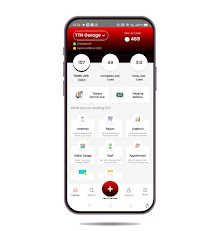
A digital job card is an electronic record of every service job that enters your workshop. Instead of writing on paper, you fill it in on your phone. It stores the customer name, vehicle number, complaint, parts used, labour charges, and final bill in one place.
The key difference from paper: it doesn't disappear. It can't be torn, misplaced, soaked in engine oil, or argued about three weeks later when a customer comes back saying you charged them for work you didn't do.
Side-by-Side Comparison
| Factor | Paper Job Card | Digital Job Card |
|---|---|---|
| Setup cost | Near zero (notebook + pen) | Low (app on your existing phone) |
| Time to fill one job card | 3 to 5 minutes | 1 to 2 minutes |
| Finding an old record | 10 to 30 minutes of searching, if not lost | Under 10 seconds by vehicle number |
| Billing accuracy | Manual calculation, easy to make errors | Auto-calculated, no arithmetic mistakes |
| GST invoice | Manual, error-prone | Auto-generated and compliant |
| Customer communication | Phone call or word of mouth | WhatsApp message sent automatically |
| Billing disputes | Your word vs the customer's word | Timestamped record, no argument |
| Parts tracking | Usually not tracked at all | Every part logged against every job |
| Monthly revenue check | Impossible without manual counting | Dashboard shows it instantly |
| Staff accountability | None | Every action logged with timestamp |
| Risk of losing records | High: fire, water, theft, torn pages | Near zero with cloud backup |
| Works without internet | Always | Yes, TTN Garage works offline |
Where Paper Job Cards Are Quietly Costing You
Most garage owners don't realise how much paper costs them. The losses are invisible. There's no red alert, no failed transaction, no error message. They just quietly disappear every month.
1. Billing disputes you can't win
A customer comes back two weeks after a service. He says you charged him for a new chain but only tightened the old one. You look at the paper job card. The handwriting is unclear. Your mechanic doesn't remember. You don't remember either.
So what do you do? Most garage owners give a discount just to end the argument.
With a digital job card, you pull up the record in 10 seconds. It shows the parts used, who did the job, and when it was completed. The dispute ends before it becomes a problem.
2. Parts used but never billed
This one hurts the most. A mechanic is working on three bikes at the same time. He uses a small oil seal on one job. A new bolt on another. Some brake fluid on a third. At the end of the day, he fills in the paper job cards from memory.
The oil seal is forgotten. The bolt never makes it onto the bill. The brake fluid is missed.
Each item is small. But across 12 to 15 jobs a day, garages using paper billing lose between 8% and 12% of their parts to unbilled inventory every month. That's not theft. That's the limitation of asking human memory to track dozens of small items under pressure.
3. Customers who don't come back
On paper, you have no way of knowing when a customer's vehicle is due for the next service. You can't remind them. They forget. And when they finally remember they need a service, they go to whichever garage is nearest or whichever one sends them a reminder.
Hero, Bajaj, Honda service centres all send reminders. So do the organised multi-brand chains that are opening up in every major city. Your customers are already used to getting these messages. If the message isn't coming from you, it's coming from someone else.
4. You can't see your own business
Answer these right now, without opening your register:
- How many jobs did you complete last month?
- Which service type made you the most money?
- Which customer hasn't returned in 60 days?
- How much inventory did you consume last week?
If you can't answer any of those in under a minute, you're running your business without being able to see it clearly. Paper makes it structurally impossible to know your own numbers.
Where Paper Job Cards Still Have an Edge
Honestly: paper isn't all bad.
Zero learning curve. A new mechanic you hire tomorrow can fill a paper job card without any training. Works without electricity or internet. And it doesn't break down if someone fills it in sloppily.
The real question isn't which one is perfect. It's which one costs you less over time.
The Questions Garage Owners Ask Most
"My customers want a paper receipt."
Digital garage apps let you print a receipt or send a PDF over WhatsApp. Your customer can still walk out with paper in hand. The difference is your backend record is now digital and searchable.
"I'm not good with phones."
If you use PhonePe or Google Pay, you can use a digital job card app. TTN Garage takes under 2 minutes to fill in. It was built specifically for Indian mechanics, not for IT companies.
"My register works fine. Why change it?"
It works. But it doesn't remind your customers to come back. It doesn't calculate GST automatically. It doesn't protect you in a dispute. And it definitely can't tell you your revenue without counting manually. Fine isn't the same as good enough for 2025.
What Garages See After Switching
Garages that move from paper to digital consistently report the same things in the first 90 days:
Repeat customers increase within 60 days. Service reminders sent on WhatsApp bring back customers who would otherwise go to the nearest competitor.
Dispute time drops from hours to seconds. Every job has a timestamped, retrievable record.
Revenue reporting becomes possible. Owners see their own numbers clearly for the first time.
"Pehle mahine ke end mein main guess karta tha kitna kamaaya. Ab main jaanta hoon."
(Before, I used to guess how much I earned at month end. Now I know.) | Garage owner, Kothrud, Pune
Which Garage Should Stay on Paper?
You can stay on paper if you handle fewer than 5 jobs a day, work completely alone, and have no plans to track inventory or grow.
You should switch to digital if you handle 5 or more jobs a day, have even one other person in the workshop, have ever had a billing dispute, or want customers coming back without you calling every single one of them.
Frequently Asked Questions
Does a digital job card replace the paper receipt for my customer?
No. Most digital garage apps let you print a receipt or send a PDF on WhatsApp. The customer can still walk out with paper if they want. The difference is that your own record is now digital, safe, and searchable.
Is a digital job card legally valid in India?
Yes. Digital records are legally admissible under the Information Technology Act, 2000. A timestamped digital job card is actually stronger evidence in a dispute than an unsigned paper slip.
How long does it take to set up digital job cards?
With TTN Garage, you can create your first digital job card within 10 minutes of downloading the app. No technical setup, no data migration needed to get started.
What happens to my old paper records when I switch?
Nothing. They stay on your shelf as historical archive. You start fresh from today and build your digital record going forward. No need to transfer old data.
Can I use digital job cards without internet in my garage?
Yes. TTN Garage works offline. Job cards created without internet sync automatically once your connection comes back.
Is it expensive?
TTN Garage starts at Rs. 999 per year, which is less than Rs. 3 per day. Basic job card and invoicing features are available on a free 10-day trial with no credit card required.
Ready to see what your garage looks like on digital job cards?
Download TTN Garage FreeTags: Garage Management, Digital Job Card, Two-Wheeler Workshop, Workshop Software India, TTN Garage


Comments
Post a Comment